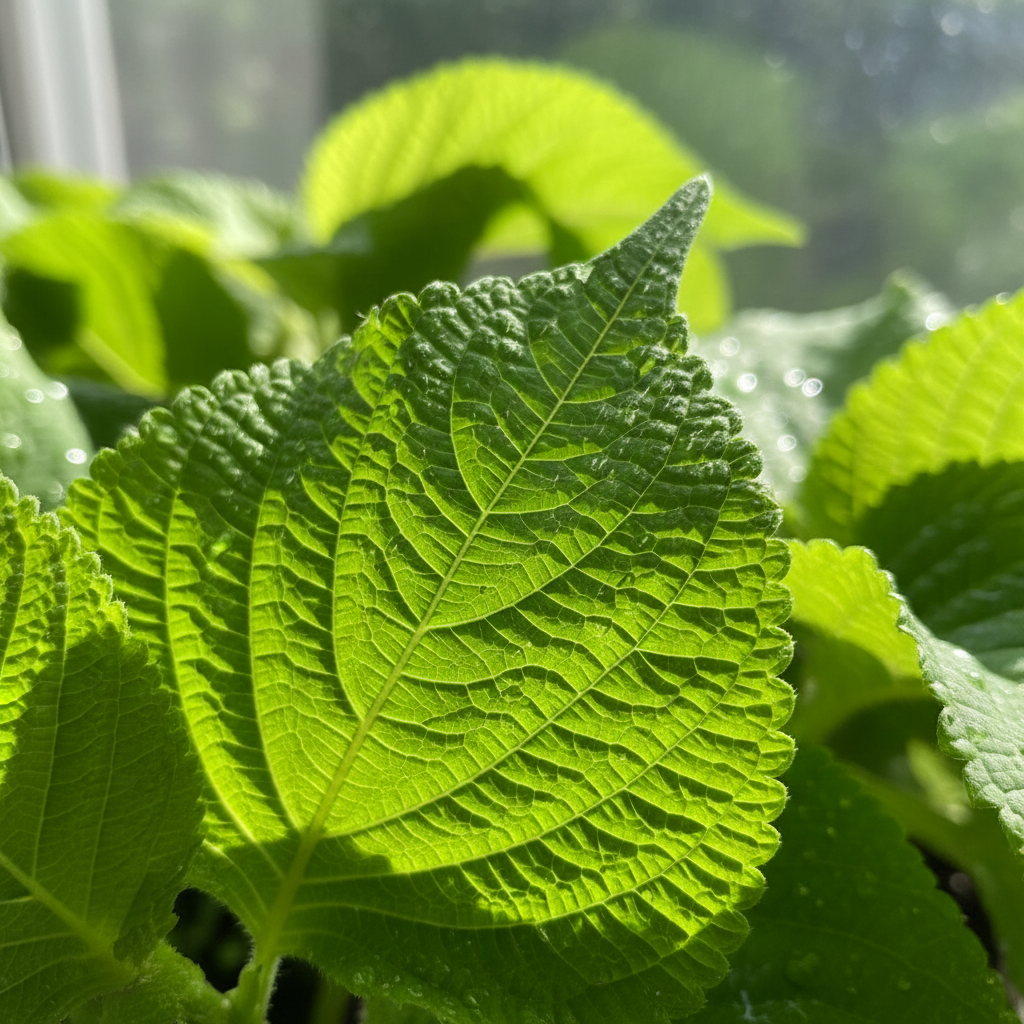
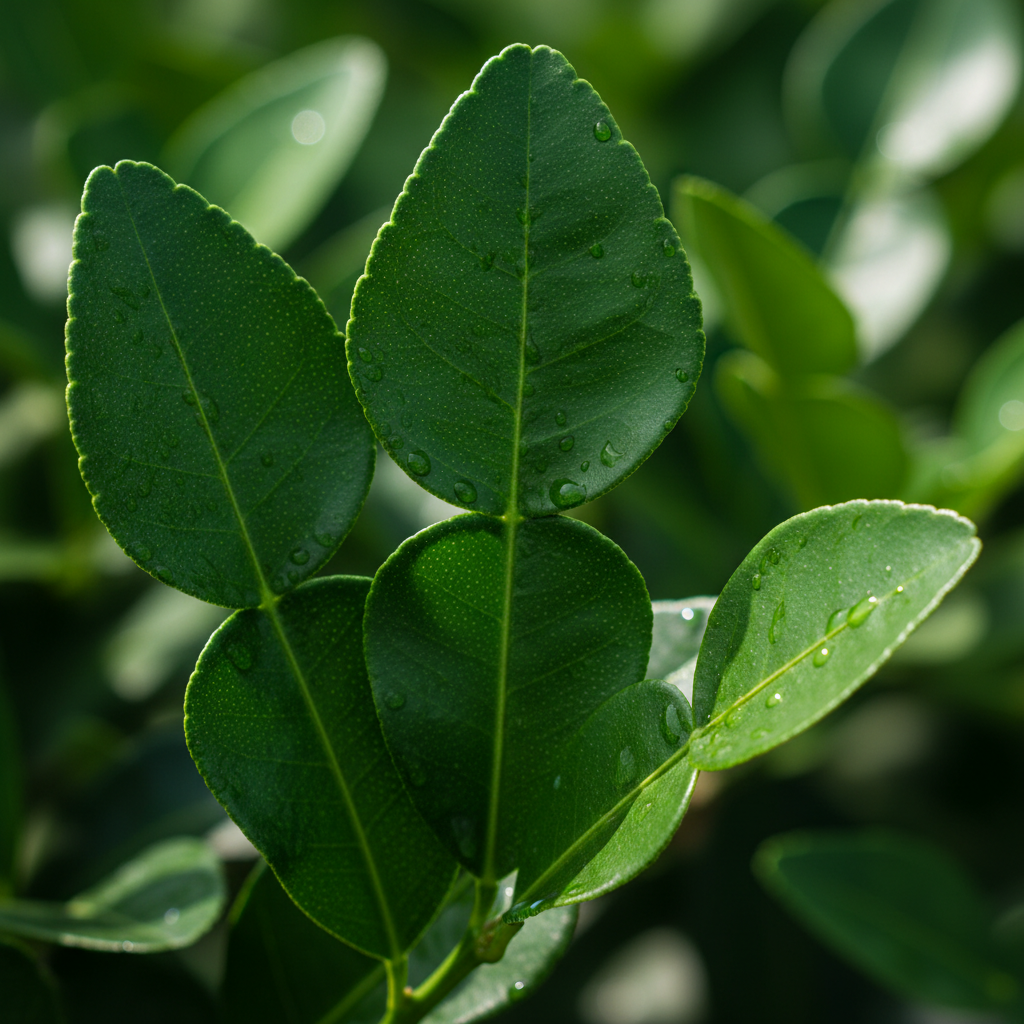
Makrut lime leaves come from the makrut lime tree, native to tropical regions of Southeast Asia, including Thailand, Indonesia, and Malaysia. These areas provide warm, humid climates ideal for the tree's cultivation, with plenty of sunlight and well-drained, fertile soils. The tree has been culturally significant for centuries, frequently used in traditional Thai, Lao, and Cambodian cooking and rituals.
The leaves are especially valued in culinary practices for their unique citrus fragrance and flavor, which are distinct from other lime varieties. Historically, makrut lime trees have also been planted around homes and temples for their pleasant aroma and perceived spiritual protection.
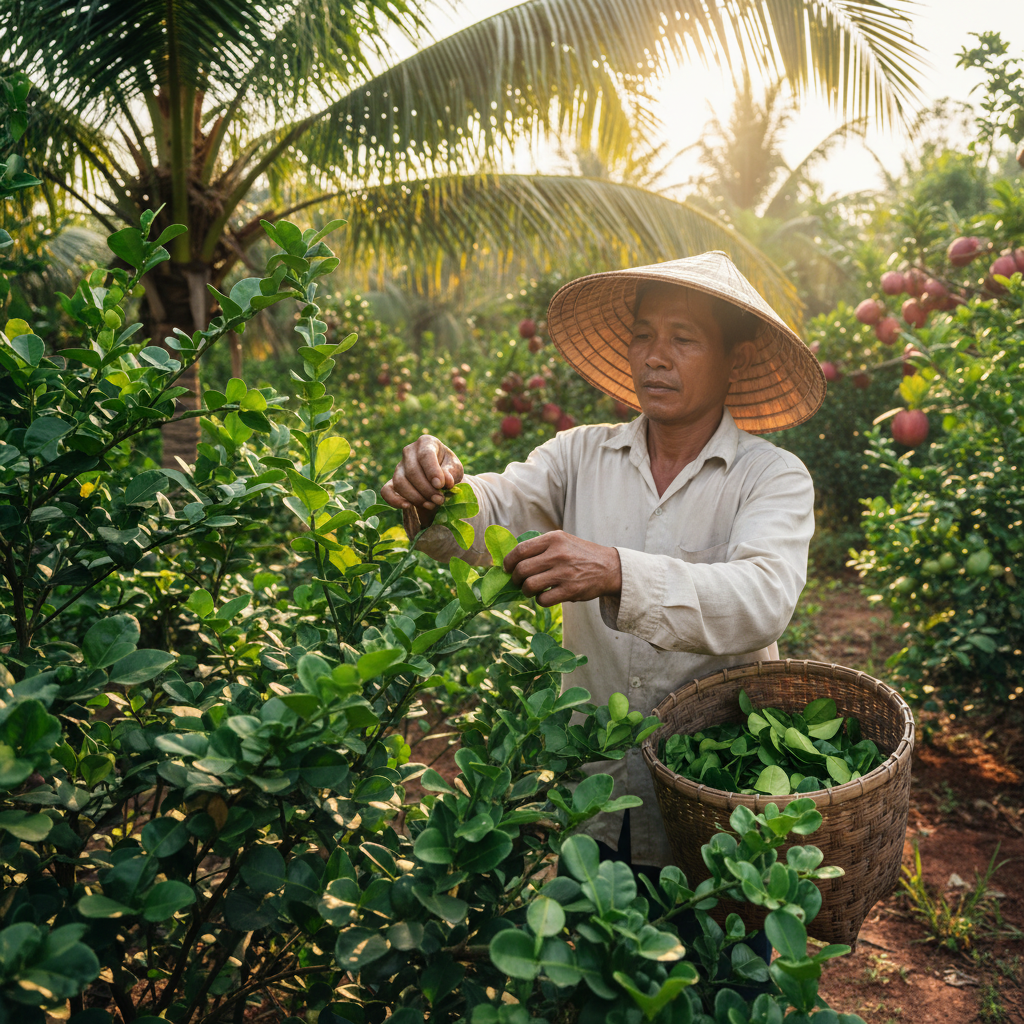
Makrut lime trees are typically grown in tropical to subtropical climates with temperatures ranging from 75 to 90°F (24 to 32°C) and require soil that is slightly acidic to neutral and well-draining. These trees flourish during the wet season but need protection from waterlogged conditions. Farmers watch for leaves that have grown to full size, glossy green color, and firm texture as indicators that they are ready for harvest.
The leaves are hand-harvested to prevent damage, usually by picking the freshest, youngest leaves from the outer branches. After harvesting, the leaves are sorted to remove damaged or discolored ones, then thoroughly washed to clean away dirt and potential residues. Post-harvest handling often involves drying the leaves in shade to preserve their essential oils and vibrant color or sometimes storing them fresh packed in breathable materials to maintain freshness.
For processing, the leaves may be dried naturally or by low-heat methods to preserve aroma. Proper drying and storage in airtight containers are key quality indicators, as well-preserved leaves retain a bright green color and strong aroma. Poor quality leaves appear brittle, darkened, or lack fragrance. When stored under proper conditions — cool, dry, and away from light — dried leaves can keep for up to a year without significant flavor loss.
Typical retail prices for makrut lime leaves range from about $3 to $8 per ounce in the United States, varying according to freshness and form—fresh or dried. Three main factors influence this price: the seasonality of harvest, transportation and import costs from Southeast Asia, and quality grading based on leaf color and aroma strength.
Home cooks are most likely to find makrut lime leaves in Asian grocery stores, specialty markets, or online retailers. Fresh leaves often command a higher price due to shorter shelf life and import logistics, while dried leaves offer longer storage and usually cost less per ounce.
A practical buying tip is to inspect dried leaves for a vibrant green hue and strong citrus aroma before purchase or to look for packaged fresh leaves that are firm and not wilted. Buying in small quantities ensures using the leaves before flavor degradation.
Makrut lime leaves offer a bright and aromatic citrus flavor profile with subtle floral and slightly bitter undertones. They are not hot or sweet but provide refreshing complexity to dishes. The texture of fresh leaves is leathery and robust, while dried leaves become brittle and can be crushed or powdered.
The three best culinary uses include infusing broths and soups like Tom Yum, flavoring curry pastes and sauces, and enhancing seafood or poultry dishes by simmering or using as a garnish. Two common mistakes are overcooking fresh leaves, which can cause bitterness, and using whole leaves without bruising, which limits flavor release.
For beginners, a simple method to extract flavor is to lightly muddle a couple of fresh or dried leaves before adding them to dishes, then remove them before serving.
Q: What pairs with lime leaf?
A: Makrut lime leaves pair well with ingredients like lemongrass, galangal, chili, coconut milk, garlic, seafood, cilantro, and Thai basil because their citrus aroma complements and balances these flavors.
Q: What flavors go with kaffir lime?
A: Kaffir lime leaves work best with bold, aromatic flavors such as lemongrass, galangal, chili, coconut milk, and fresh herbs, creating layered, vibrant profiles in Southeast Asian dishes.
Q: How to extract flavor from kaffir lime leaves?
A: To extract flavor, lightly bruise or crush the leaves before adding them early in cooking, or finely shred them to release oils, then remove whole leaves before serving.
Q: How do you use makrut lime leaves?
A: Use makrut lime leaves by infusing them in soups, curries, and sauces or by shredding into salads and pastes; fresh leaves are typically added during cooking and removed before serving due to their tough texture.