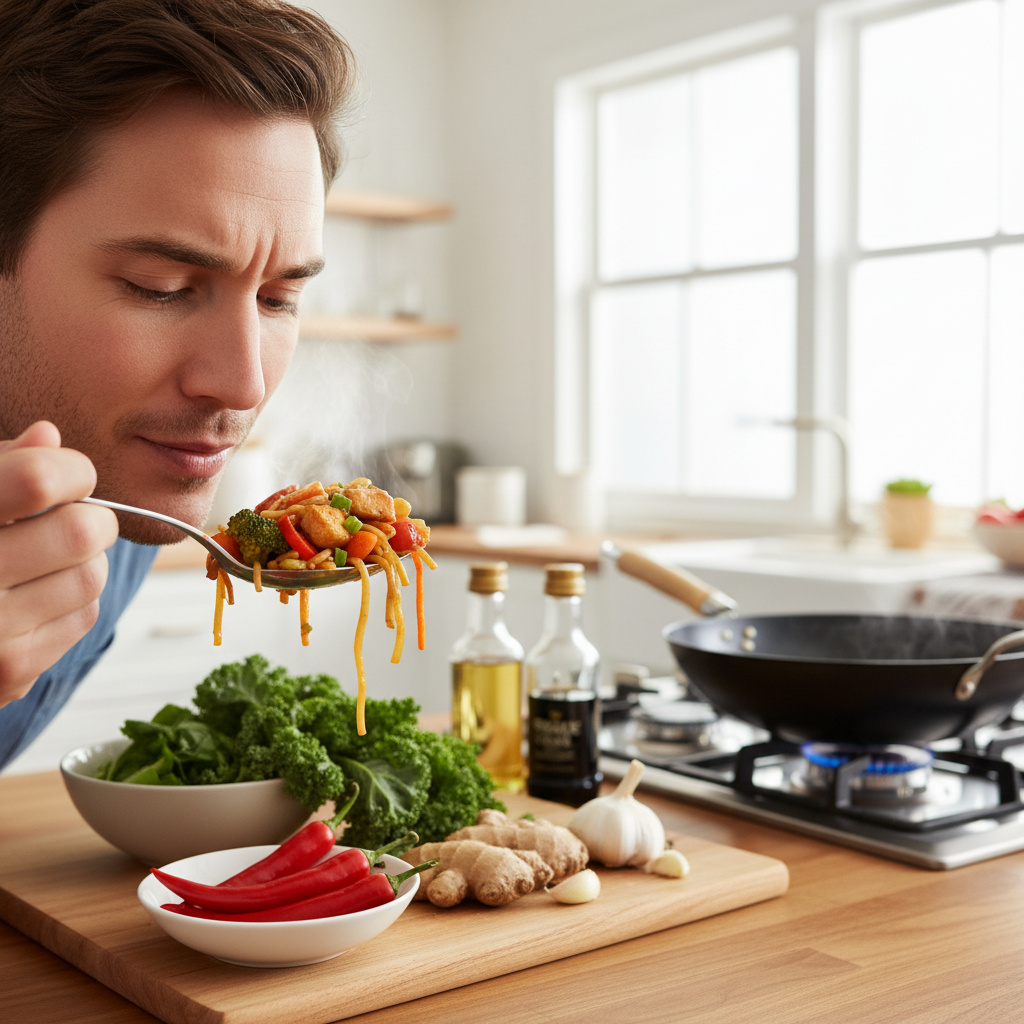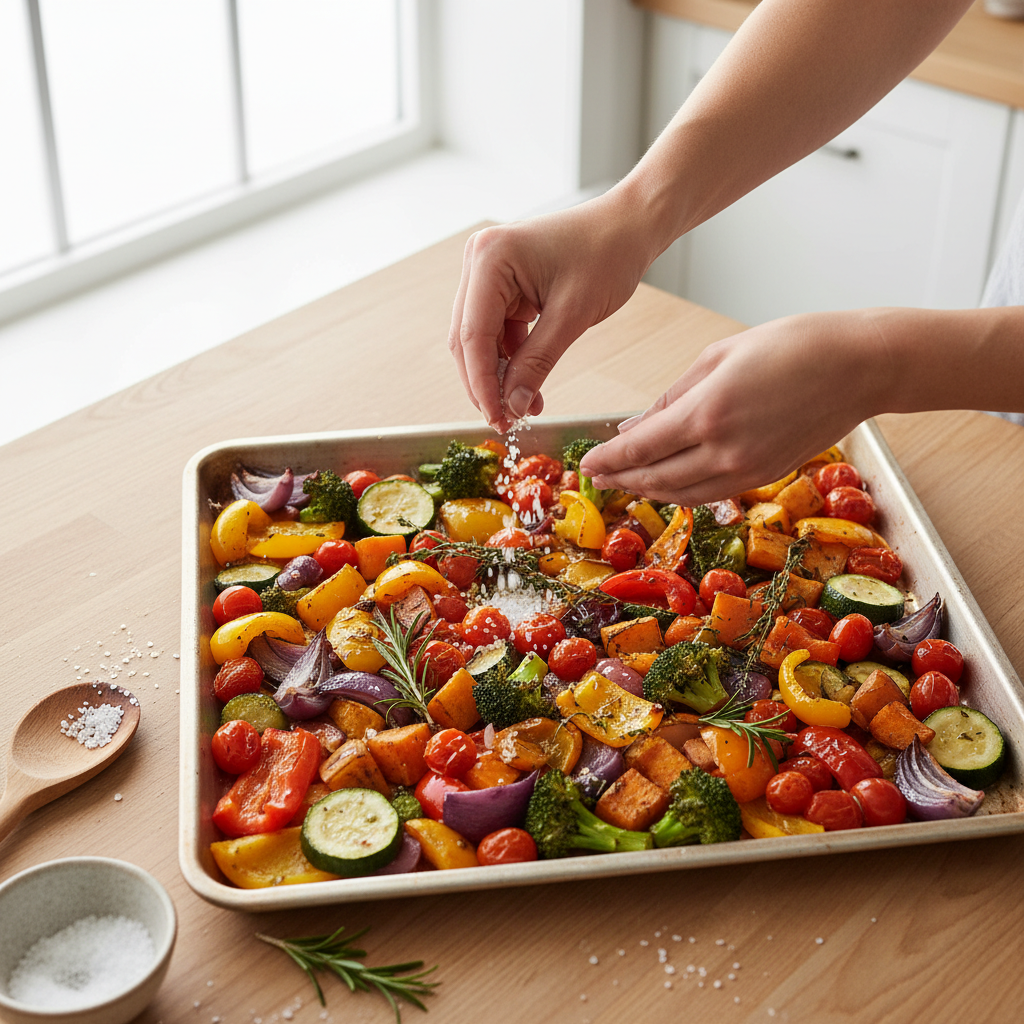
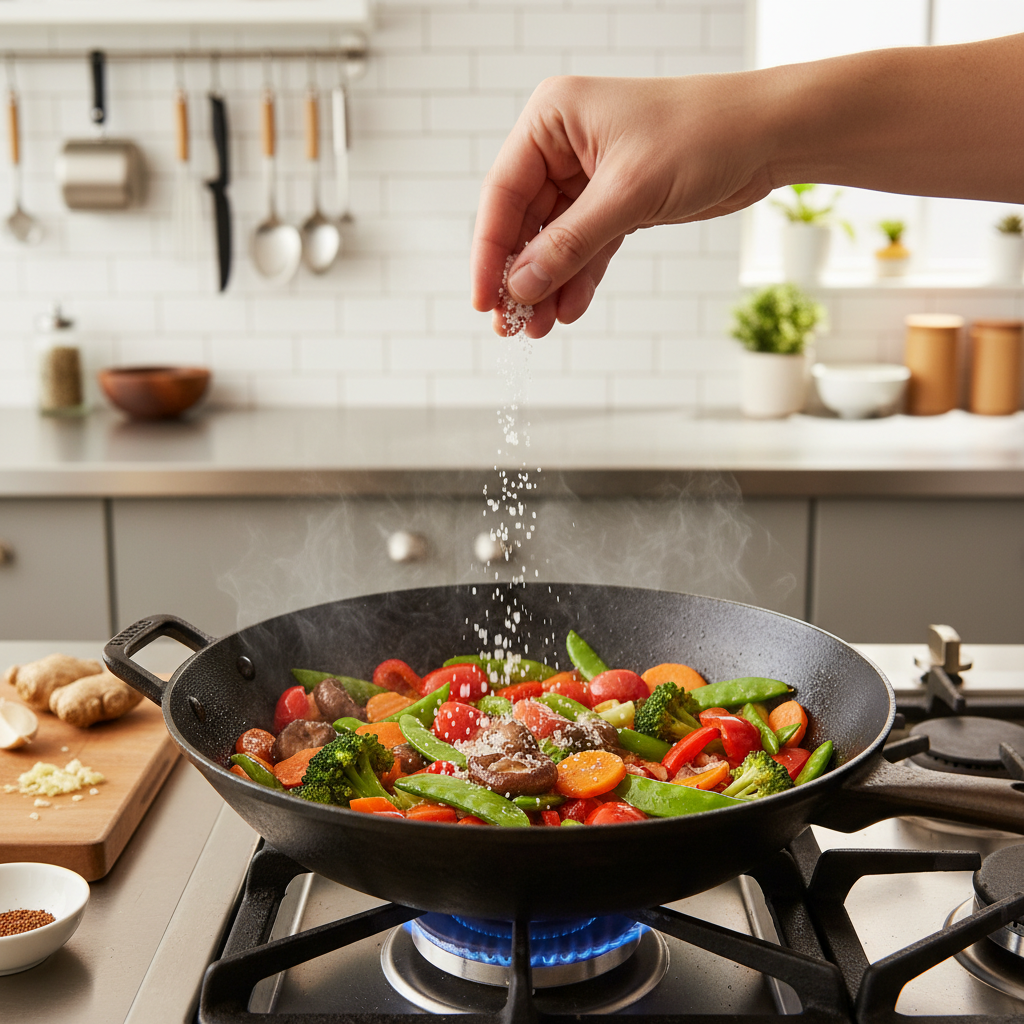
Salt is a foundational seasoning in stir fry cooking, but how and when to use it can greatly affect the flavor. Proper seasoning transforms simple stir fry into a balanced and flavorful dish.
The core to great stir fry seasoning includes salt, acid, fat, heat, and aromatics. Salt enhances the natural flavors of your ingredients and aids in flavor layering. Acids like citrus or vinegar brighten the dish, while fats carry and mellow flavors. Heat releases aromas and deepens taste, and aromatics such as garlic, ginger, and scallions add complexity.
In stir fry, you typically add salt in stages: lightly seasoning the protein at the start, seasoning vegetables mid-cooking, and finishing with a pinch at the end for brightness.
Begin with a small, typical amount of salt (about ½ teaspoon per 4 servings) when searing protein. Add more salt gradually with vegetables and sauces and finish by tasting to adjust. Layer other seasonings including aromatics early for flavor development, then adjust acidic or sweet components last to balance the dish.
Taste your stir fry before finishing. If it tastes flat, it likely needs more salt or acid. If too salty, balance with a touch of sweetness or fat. Adjusting seasoning in stages helps avoid over-seasoning and builds nuanced flavor.
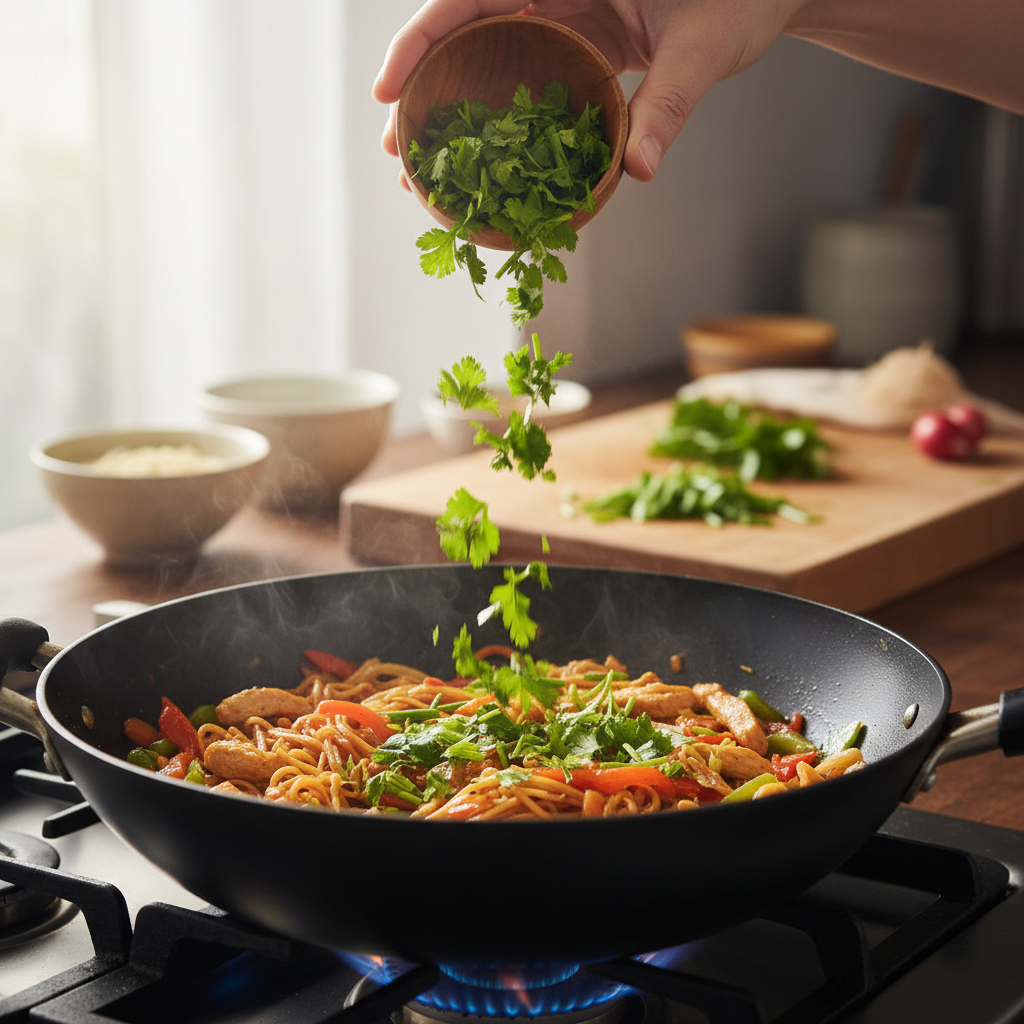
Make a simple vegetable stir fry and season in three stages: lightly salt the vegetables as they cook, add salt again with sauce, then taste and adjust salt and acid at the end. Notice how the flavor builds and balances with each addition.
Does your stir fry taste bright, balanced, and savory? Is salt enhancing but not overpowering? Are there complementary notes from aromatics and acid? If you answer yes, your seasoning is on point.
Q: Do you put salt in stir fry at the beginning or end?
A: It’s best to season in layers—start lightly at the beginning and adjust as you go, finishing with a final taste and seasoning check.
Q: Can too much salt ruin a stir fry?
A: Yes, but balancing salt with acid or sweetness can help adjust if you add too much.
Q: How does salt affect the flavor of stir fry?
A: Salt enhances natural flavors and helps the other seasonings shine by balancing taste.
Q: Should I use other seasonings besides salt?
A: Absolutely—layer aromatics, acids, and umami-rich ingredients for a sophisticated flavor profile.